Do they help move members to the right care earlier?
That’s how we look at it at RWS.
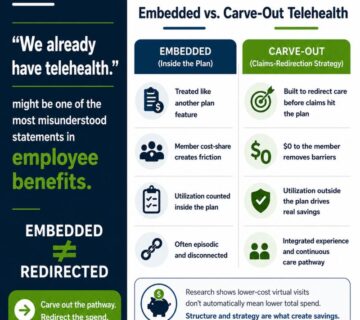
If someone uses virtual urgent care for a non-emergency issue instead of going through a higher-cost setting tied to the major medical plan, that can matter.
If virtual primary care helps catch blood pressure issues, A1C concerns, medication problems, obesity risk, depression, anxiety, or other concerns earlier, that can matter too.
No program prevents every claim. Nobody serious should promise that.
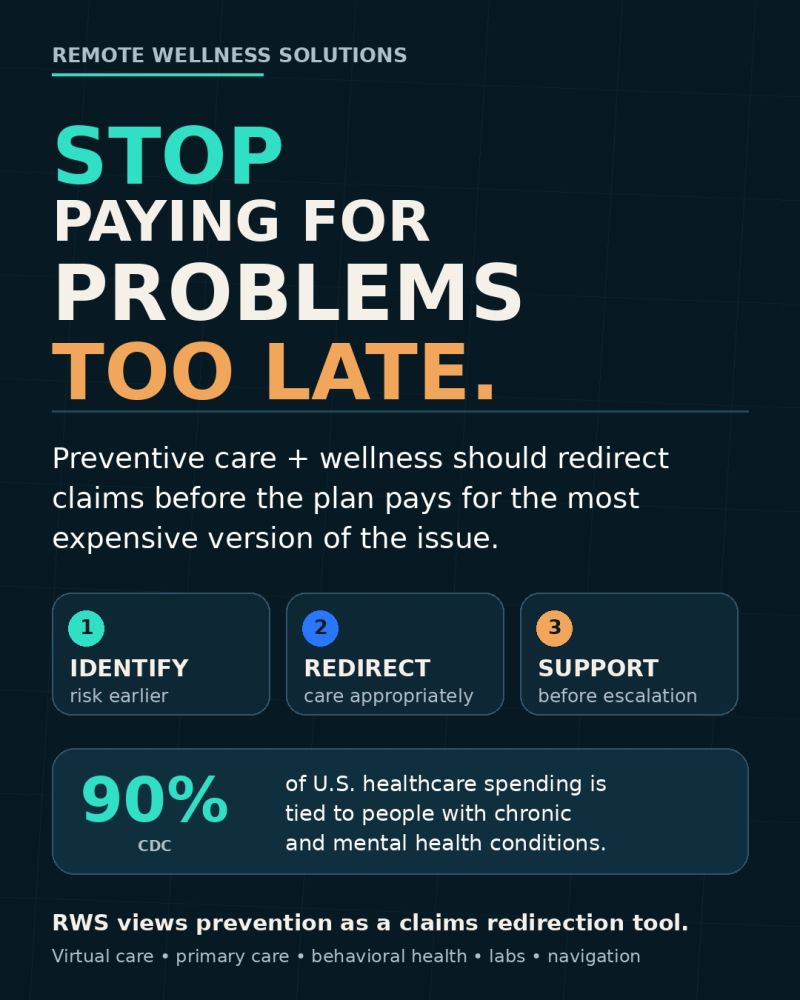
But the right program can help redirect care, surface risk earlier, and give members a cleaner path before small problems become large, expensive problems.
That is especially relevant when KFF reports the average employer-sponsored family premium reached $26,993 in 2025, and the CDC reports that 90% of the nation’s $5.3 trillion in annual healthcare spending is tied to chronic and mental health conditions.
At RWS, we care less about how many benefits are listed on a flyer and more about what happens when a member actually uses the program.
Does it help them get care sooner?
Does it help the plan avoid unnecessary claims when a lower-cost, appropriate access point exists?
Does it support prevention, primary care, behavioral health, prescriptions, screenings, and navigation in a way that makes sense?
That’s the conversation we want to have with employers, brokers, consultants, TPAs, PEOs, associations, affinity groups, and PCMP/wellness program operators.
Not “how many things can we bundle?”
More like:
What problem are we trying to solve?
What care access is missing?
Where are costs being driven?
Where can we redirect members before the plan pays for the most expensive version of the issue?
That’s where preventive care and wellness can become more than a benefit line item.

No comment