Untitled design 57 1200x500

Two Powerful Ways Chambers Can Increase Member Value and Create New Revenue

By Matthew Seibel
CEO & Co-Founder, Remote Wellness Solutions

For years, Chambers of Commerce have faced the same challenge: how do we provide more value to our members while creating sustainable revenue to support our mission?

Membership expectations continue to rise, operating costs continue to increase, and businesses expect more than networking events and newsletters. Today’s Chamber leaders need innovative ways to strengthen membership while remaining financially healthy.

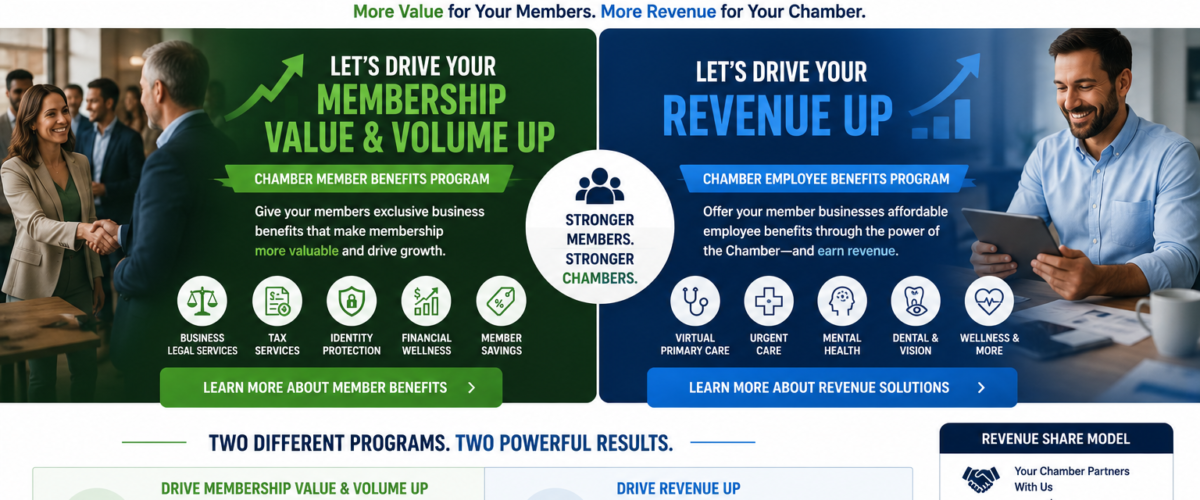
At Remote Wellness Solutions, we’ve developed two complementary partnership models designed specifically for Chambers of Commerce. While they work well together, they solve two very different challenges.


Model One: Increase Membership Value

Every Chamber wants members to feel they receive more value than they pay in annual dues.

Our Chamber Member Benefits Program helps accomplish exactly that by providing valuable business services that members can use throughout the year.

Member benefits can include:

  • ✔ Business Legal Services
  • ✔ Tax Services
  • ✔ Identity Protection
  • ✔ Financial Wellness Resources
  • ✔ Exclusive Member Savings Programs

Rather than simply offering another discount card, this program provides practical business tools that help companies operate more effectively.

Benefits to the Chamber

  • ✔ Increase the perceived value of membership
  • ✔ Differentiate your Chamber from competing organizations
  • ✔ Improve member retention
  • ✔ Attract new members with meaningful benefits
  • ✔ Strengthen your Chamber’s value proposition

When businesses see tangible value in their membership every day—not just during networking events—they are far more likely to renew and recommend your Chamber to others.


Model Two: Create a New Revenue Stream

While the first model focuses on increasing membership value, the second focuses on creating long-term financial sustainability.

Our Chamber Employee Benefits Program allows member businesses to offer affordable virtual healthcare and wellness benefits to their employees through the collective purchasing power of the Chamber.

The program includes services such as:

  • ✔ Virtual Primary Care
  • ✔ Urgent Care
  • ✔ Mental Health Services
  • ✔ Dental & Vision Programs
  • ✔ Wellness and Preventive Care

Participating businesses gain access to affordable employee benefits, while the Chamber receives recurring revenue through our Revenue Share Program.

Benefits to the Chamber

  • ✔ Help member businesses reduce healthcare costs
  • ✔ Leverage group purchasing power
  • ✔ Generate recurring monthly revenue
  • ✔ Create a sustainable non-dues income stream
  • ✔ Strengthen relationships with member businesses

This creates a true win-win partnership where businesses receive valuable employee benefits and the Chamber develops a new source of ongoing revenue.


Two Different Challenges. Two Different Solutions.

Although these programs complement each other, they serve different purposes.

Chamber Member Benefits ProgramChamber Employee Benefits Program
Increases membership valueCreates recurring revenue
Benefits Chamber members directlyBenefits employees of member businesses
Helps attract and retain membersHelps employers offer affordable healthcare
Business tools and member servicesEmployee healthcare and wellness benefits
Focused on member engagementFocused on business support and Chamber sustainability

Stronger Members. Stronger Chambers.

The most successful Chambers continually look for new ways to serve their business community while building financial stability for the future.

By combining a Member Benefits Program that increases membership value with an Employee Benefits Program that creates recurring revenue, Chambers can strengthen their organizations, better support local businesses, and position themselves for long-term growth.

The future of Chamber membership isn’t simply adding more events—it’s delivering measurable value that businesses can use every day.

If your Chamber is exploring new ways to increase membership value, improve retention, and generate sustainable revenue, we’d welcome the opportunity to discuss how these two partnership models can work for your organization.

Learn more or schedule a consultation with Remote Wellness Solutions today.
ChatGPT Image Jul 15 2026 01 26 23 PM 1200x500

A New Revenue Model for Chambers of Commerce and Membership Organizations

A New Revenue Model for Chambers of Commerce and Membership Organizations

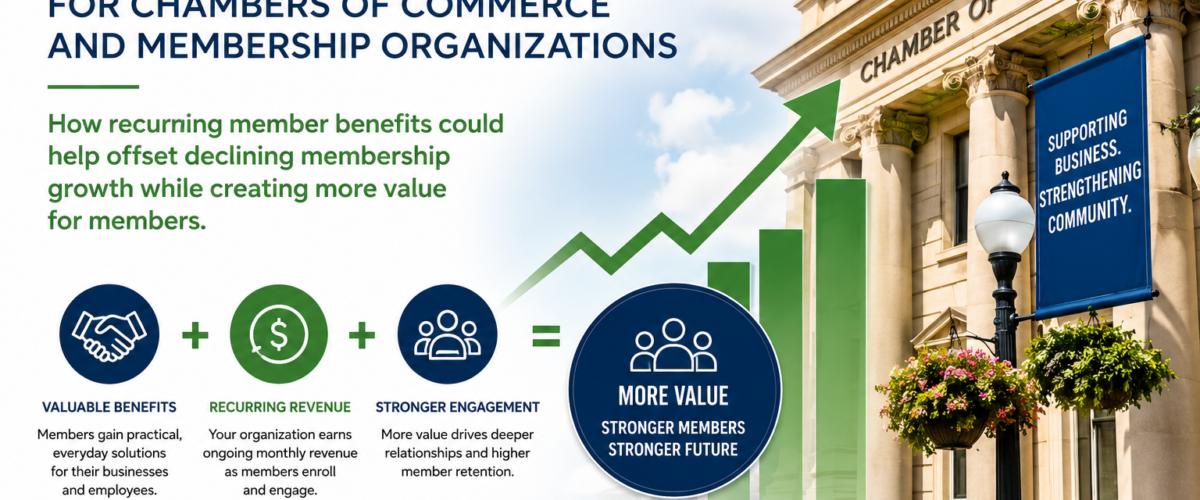
How recurring member benefits could help organizations strengthen revenue while delivering greater value to members.

For generations, Chambers of Commerce and membership organizations have served as the backbone of their local business communities. They connect business leaders, advocate for economic growth, provide educational opportunities, and create valuable networking relationships.

That mission hasn’t changed.

What has changed is the business environment surrounding it.

According to the American Society of Association Executives (ASAE), “Association membership has been flat or declining for nearly a decade,” citing Marketing General’s Membership Marketing Benchmarking Reports. As organizations compete for members’ attention while operating costs continue to rise, many are being forced to rethink how they generate revenue and demonstrate value.

Membership dues alone may no longer be enough to support long-term growth.

The Traditional Model Is Being Challenged

For decades, the formula has remained largely the same.

Recruit new members.
Retain existing members.
Collect annual dues.
Generate additional income through sponsorships, events, advertising, and educational programs.

These revenue sources continue to play an important role, but they also require significant time, planning, and ongoing effort. Every year, organizations essentially start over—working to renew memberships, secure sponsors, and fill event registrations.

There is nothing wrong with this model.

The question is whether there are additional revenue opportunities that can complement it.

Members Expect More Than Networking

Businesses today expect membership organizations to provide more than networking events and advocacy.

They are looking for practical resources that help them operate their businesses, support their employees, and reduce expenses.

Organizations that consistently introduce meaningful benefits often strengthen member engagement while creating additional reasons for businesses to join—and renew.

That shift opens the door to a different way of thinking about membership value.

From Annual Dues to Recurring Revenue

Imagine a Chamber of Commerce introducing a voluntary virtual healthcare and wellness benefit to its member companies.

The Chamber does not build the program.
It does not hire staff to manage it.
It does not provide customer service.

Instead, a trusted partner develops and manages the entire program—including vendor relationships, implementation, enrollment support, customer service, and ongoing administration.

The Chamber simply introduces the opportunity to its members.

When employees voluntarily enroll, the organization earns recurring monthly revenue.

Rather than relying exclusively on annual membership renewals, the Chamber creates an additional revenue stream that grows alongside member participation.

Membership Dues Will Always Matter

Membership dues remain the financial foundation of most Chambers and associations.

Depending on the organization and membership level, businesses often invest anywhere from a few hundred dollars to well over one thousand dollars each year to belong.

That revenue is essential.

However, it is also limited. Once a membership is sold, the organization generally doesn’t generate additional revenue from that business until the following renewal cycle.

Recurring revenue models operate differently.

Instead of depending entirely on annual renewals, organizations can generate ongoing monthly income from voluntary member participation in programs that provide real, everyday value.

This creates a more diversified financial model without increasing membership dues.

Creating Value Instead of Simply Selling Memberships

Perhaps the biggest advantage of this approach isn’t the recurring revenue.

It’s the additional value provided to members.

Small and medium-sized businesses are constantly looking for affordable ways to improve employee benefits while managing costs.

Programs such as virtual primary care, urgent care, behavioral health services, wellness resources, and prescription savings can provide meaningful value to employers and their employees without requiring the Chamber to become a healthcare provider or benefits administrator.

The Chamber becomes the organization that connected its members with a valuable resource.

That creates another reason for businesses to remain engaged and continue their membership.

The Future May Be Built on Partnerships

Membership organizations have always evolved alongside the needs of their communities.

Today’s challenges don’t necessarily call for abandoning the traditional membership model—they call for expanding it.

Strategic partnerships that create recurring, non-dues revenue while delivering meaningful member benefits may become an increasingly important part of the next generation of Chambers of Commerce and business associations.

The organizations that thrive over the next decade may be those that continually ask a simple question:

How can we create more value for our members while building a stronger, more sustainable organization?

For many Chambers and membership organizations, the answer may not be found in increasing membership dues.

It may be found in creating entirely new ways to serve the businesses that already trust them.

Pest Control 1200x500

Health Benefits for Small Businesses: An Affordable Way to Support Employees

Health Benefits for Small Businesses: An Affordable Way to Support Employees

For many small businesses, offering traditional health insurance is one of the most difficult decisions they face. Owners understand the importance of helping employees access healthcare, but rising premiums, deductibles, and administrative costs often place comprehensive health plans beyond the reach of smaller organizations.

The result is that many employers want to provide a meaningful benefit but simply cannot justify the cost of a traditional group health insurance plan.

Fortunately, today’s healthcare landscape offers additional options that can help improve access to care without replacing traditional insurance.

A Different Approach to Employee Healthcare

Virtual healthcare programs have become an increasingly popular benefit because they provide employees with convenient access to licensed healthcare professionals from virtually anywhere. While these programs are not health insurance, they can help employees receive care for many common healthcare needs quickly and conveniently.

For employers that cannot currently offer a traditional health plan, virtual care may provide an opportunity to offer employees access to healthcare services at a much lower monthly cost.

What Can Virtual Care Include?

Depending on the program selected, virtual healthcare may include services such as:

  • Virtual Primary Care
  • Virtual Urgent Care
  • Behavioral Health
  • Care Navigation
  • Health Coaching
  • Other virtual healthcare services designed to improve access to care

Many organizations also choose to pair virtual care with a prescription savings program.

One example is a program that offers access to a large list of commonly prescribed generic medications with no out-of-pocket cost to the member when obtained through the program’s participating pharmacy network. These prescription programs are separate healthcare services and are not insurance.

Together, virtual care and prescription access can create a valuable healthcare benefit for employees while remaining significantly more affordable than many traditional group health plans.

Affordable Benefits Can Still Make a Difference

For approximately $30 per employee per month (depending on the selected program and group), many employers can provide access to virtual primary care along with a prescription benefit that may include many commonly prescribed medications at no cost to the employee through participating pharmacies.

While these programs are not intended to replace comprehensive health insurance, they may help employees:

  • Access care sooner
  • Avoid unnecessary trips for routine healthcare needs
  • Speak with licensed healthcare providers from home or work
  • Reduce barriers to obtaining many common generic medications through participating programs

For many employees who currently have little or no healthcare access, this type of benefit can provide meaningful value.

Every Business Is Different

There is no single healthcare solution that fits every employer. Some organizations may benefit from traditional health insurance, while others may choose to supplement an existing plan with virtual care. Some employers who cannot yet afford comprehensive insurance may decide that offering virtual healthcare is a practical first step toward supporting their workforce.

The important thing is understanding the available options and selecting a program that aligns with your organization’s goals and budget.

How Remote Wellness Solutions Can Help

Remote Wellness Solutions works with employers, organizations, brokers, and benefit professionals to evaluate available virtual healthcare solutions. We help identify programs that fit an organization’s needs, explain how they work, and coordinate implementation with trusted vendor partners.

Our role is to help organizations understand their options—not to replace health insurance or recommend that employers forgo traditional coverage when it is appropriate.

If your business has wanted to offer a healthcare benefit but believed it was financially out of reach, it may be worth exploring today’s virtual healthcare options. Even a modest monthly investment can help improve access to care and demonstrate your commitment to employee well-being.

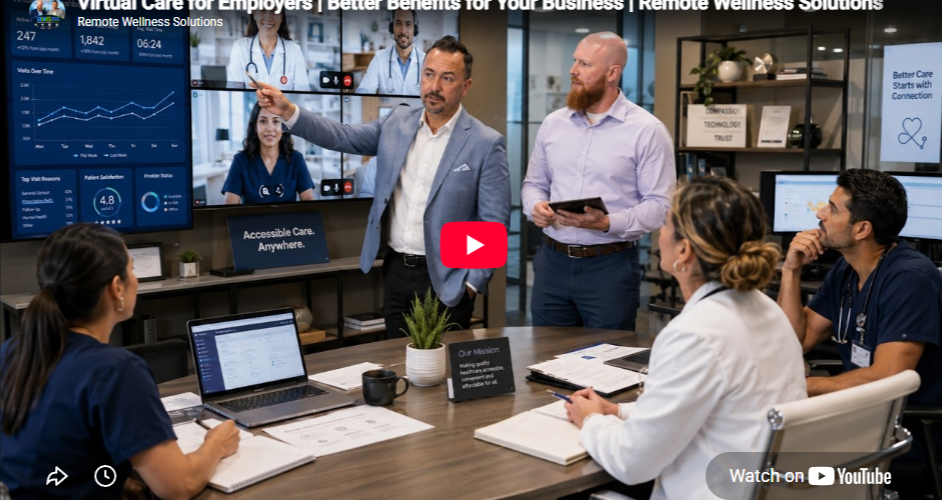
Vc video 1 942x500

Virtual Healthcare Is Transforming the Way Organizations Deliver Employee Benefits

Virtual Healthcare Is Transforming the Way Organizations Deliver Employee Benefits

Healthcare is changing faster than ever. Rising costs, provider shortages, long wait times, and growing employee expectations are forcing organizations to rethink how healthcare is delivered. Virtual healthcare has become an important part of that solution by improving access to care while helping employees receive timely treatment from virtually anywhere.

Healthcare Without the Waiting Room

Virtual healthcare allows individuals to connect with licensed medical professionals using a smartphone, tablet, or computer. Instead of waiting days or weeks for an appointment, patients can often receive care within minutes or hours, making healthcare more convenient and accessible.

Depending on the program selected, virtual healthcare can include:

  • Virtual Primary Care
  • 24/7 Urgent Care
  • Behavioral Health
  • Counseling and Psychiatry
  • Women’s Health
  • Men’s Health
  • Dermatology
  • Nutrition Services
  • Chronic Condition Management
  • Care Navigation
  • Specialist Referrals
  • Wellness and Preventive Care

These services allow patients to receive care from home, the office, or while traveling, reducing unnecessary trips to urgent care centers and emergency rooms.

Benefits for Employers

Employers are continually looking for ways to improve employee benefits while managing healthcare costs. Virtual healthcare can help accomplish both goals by making care easier to access and encouraging employees to seek treatment before small issues become larger, more expensive medical problems.

Potential benefits include:

  • Faster access to medical care
  • Improved employee satisfaction
  • Reduced absenteeism
  • Increased productivity
  • Better utilization of preventive care
  • Lower unnecessary emergency room visits
  • Enhanced support for remote and traveling employees

When employees have convenient access to healthcare, they are more likely to use it, leading to healthier workforces and a better overall benefits experience.

Helping Employees Navigate Healthcare

Many employees struggle to understand where they should go for care. Should they visit the emergency room, urgent care, their primary care physician, or use virtual care?

A well-designed virtual healthcare program helps simplify these decisions by providing convenient access to medical professionals who can evaluate symptoms, recommend appropriate treatment, prescribe medications when clinically appropriate, and coordinate additional care when needed.

Supporting Rural Communities

Virtual healthcare also plays an important role in expanding access to care for rural communities where provider shortages continue to grow. Patients who may otherwise travel hours for routine appointments can often receive quality care from home while maintaining connections to local healthcare providers when in-person treatment is necessary.

For hospitals and healthcare systems, virtual care can complement existing services by extending access, improving patient engagement, and helping organizations reach underserved populations.

Building the Right Virtual Healthcare Strategy

Not every virtual healthcare solution is the same. Organizations should evaluate programs based on the needs of their employees, healthcare goals, budget, and existing benefit structure.

A successful strategy often combines multiple virtual care services into one coordinated program that is easy for employees to understand and use.

How Remote Wellness Solutions Can Help

At Remote Wellness Solutions, we take a consultative approach to virtual healthcare. Rather than offering a one-size-fits-all solution, we work with employers, associations, brokers, healthcare organizations, and other groups to identify the right virtual care partners and build programs that fit their specific needs.

Whether your organization is exploring virtual primary care, behavioral health, wellness initiatives, prescription savings, specialty services, or a comprehensive virtual healthcare strategy, our goal is to help simplify the process and connect you with solutions that improve access, enhance employee benefits, and support long-term healthcare objectives.

As healthcare continues to evolve, virtual care is becoming an essential component of modern employee benefits. Organizations that embrace these solutions today are positioning themselves to provide greater access, increased convenience, and a stronger healthcare experience for the people they serve.